

Buying AMIRI Online Without Ending Up Stung
AMIRI is a Los Angeles house whose everyday pieces fall roughly between $420 and $1,300 in observed market listings, which is precisely the band counterfeit sellers work hardest to imitate. Sales run directly through the brand’s own website and through a published list of authorised stockists; nearly anything outside those two groups deserves a second look. Queries such as buy amiri online, amiri clothing, amiri hoodie and amiri men deliver shoppers to a results page where department stores, marketplace resellers and outright fakes sit within a few positions of one another. What follows works through the channels one by one and spells out plainly what each of them actually is. The figures here are observed market prices assembled in 2026; not one of them comes from an official price list. Build one habit above all others: measure an unfamiliar seller against the brand’s own published stockists page before a card number goes in.
The Brand’s Own Website
A single official e-commerce operation is run by the house, and it is the only online shop the brand itself controls. More than two hundred countries and regions are served, with the full current assortment across men’s, women’s and kids’. Returns run to ten days from delivery for unworn merchandise with tags attached, with final-sale items kept out. After-sales service and repairs are handled case by case, only for products bought from that site, and repair fees can apply. That same operation lies behind roughly thirty-three physical boutiques, a number of which the store locator still marks as coming soon. The first permanent store opened on Rodeo Drive in Beverly Hills in 2020, and Milan later became the first permanent European location.
Authorised Multi-Brand Retailers
A stockists page is published by the brand, and every retailer named there holds a direct wholesale relationship with the house. In the United States that list combines department stores with specialist amiri sweatsuit boutiques, and in Europe it runs to dozens of accounts, Italy carrying the longest single-country roster. The value of the list is not that these shops are cheaper, because at full price they are not, but that their goods are certainly real. A single caveat carries real weight here, because that stockists page is left to drift. The page still lists a well-known British retailer that shut down in 2024 and misspells several shop names, both marks of something kept as marketing rather than as a live directory. Take it as a whitelist of names to recognise, and never as proof that a given shop is still trading.
- Named on the brand’s own online list: Mr Porter, SSENSE, Mytheresa, LuisaViaRoma, Browns, END., 24S, Monnier
- United States: Nordstrom, Saks Fifth Avenue, Neiman Marcus, Bergdorf Goodman, Maxfield, The Webster
- Further afield: Selfridges, Harrods, Harvey Nichols, Holt Renfrew, Galeries Lafayette
How Farfetch Fits In
Of all the channels, Farfetch causes the most confusion, and honestly it sits in neither of the obvious boxes. The brand’s own online stockist list does not name it, so calling it an official stockist overstates the relationship. Nor is it an unauthorised seller, since it functions as a marketplace for boutiques that are themselves named stockists, several of them Italian. In practice the garment often ships from a shop with a genuine wholesale account even though the storefront itself has no listing. That nuance is worth safeguarding, since most guidance flattens it in one direction or the other. Buying there means one extra step: identify the fulfilling boutique, then match that name against the stockists page.
The Off-Price and Sale Channels
Claims that the brand never discounts are plainly wrong, and the discounting conditions the rest of the market. In season, authorised multi-brand retailers mark down AMIRI visibly, and observed reductions run in the region of forty to seventy percent on jeans, hoodies and outerwear. A jean listed at $1,345 has been observed at $673; a varsity jacket listed at $2,310 has been observed at $1,155. Established retail groups run off-price arms, Saks OFF 5TH among them, which also carry the label and move past-season stock at steep reductions. Those goods are legitimate, and the seller is a real retailer working through surplus rather than a shadow operation. What that channel is emphatically not is a brand outlet, and the distinction carries the whole of the next section.
The Outlet That Does Not Exist
Nothing in this article matters more, and it comes from the brand itself in a court filing, not from a blog. In a federal court complaint filed in July 2021, AMIRI stated that it “does not have an AMIRI outlet store, nor has it ever authorized any person or business to operate such a store.” The suit was brought in the United States District Court for the Central District of California against an internet service provider the brand alleged was knowingly hosting a counterfeit-selling site styling itself as an AMIRI outlet. That site branded itself an “Official Discount Store” advertising “100% Original Products” and claimed to stock more than a hundred authentic pieces at heavy discounts. In September 2021 the case was voluntarily dismissed, most likely on settlement, yet the brand’s statement remains on the record. So there is no official outlet anywhere, whether on the web or on a street. Any storefront presenting itself as an AMIRI outlet is by definition not the brand, and that single test disqualifies it before you look at anything else.
How a Fake Outlet Site Announces Itself
These storefronts share a template, and once you have seen the pattern it is hard to unsee. Drawn from the documented 2021 case and from the general shape of such operations, the tells below are described rather than named, since naming a domain drives visitors to it. None of the items is proof by itself, yet three or four together are definitive. Absence from the brand’s published stockists page remains the strongest test, and it costs about fifteen seconds to check. Second strongest is the discount pattern, since no authorised channel reduces current-season stock across every category at once. The checkout page deserves as close a reading as the product page, as payment handling is where such operations most often give themselves away.
- A name welded together from the brand name and a trust word such as outlet, official, shop, store or sale
- Status the shop claims on its own: “Official Site”, “Official Discount Store”, “100% Original Products”, “Authentic Guaranteed”
- Reductions of fifty to eighty percent applied everywhere, sweeping in current-season pieces
- An improbably deep catalogue shown through scraped official campaign photography
- Nothing on the stockists page, and no verifiable company registration, address or telephone number
- Countdown timers, “only two left” mechanics, and a payment processor whose name does not match the shop
Channel Comparison
The table sets the channels side by side on the two questions that matter: whether the goods are certainly genuine, and what you can expect to pay against full price. What the pricing column records is observed behaviour in 2026, not an official price list. Authentication risk here is a verdict on the channel rather than a promise about any particular trader inside it. Verification by the brand covers only products bought directly from it or from an authorised stockist partner, and it says plainly that items bought outside those channels fall outside what it can confirm. Because of that policy, provenance rather than micro-inspection of stitching is the thing worth optimising for. Read the final row as an absolute rather than as a caution.
| Route | Standing | Observed pricing | Risk to authenticity |
|---|---|---|---|
| The brand’s own site | Official | Full price throughout | None |
| The stockists the brand names | Official wholesale accounts | Full price, then seasonal sale | Very low |
| Farfetch | Marketplace for stockist boutiques | Full price and sale | Low, provided you check the fulfilling boutique |
| Off-price arms of retail groups | Legitimate, past-season stock | Marked down 40 to 70 percent | On the low side |
| Secondary-market platforms | Seller to buyer, directly | Below retail more often than not | Real, varies by platform |
| Any self-styled outlet | Does not exist | Of no consequence | Absolute |
A Pre-Checkout Routine
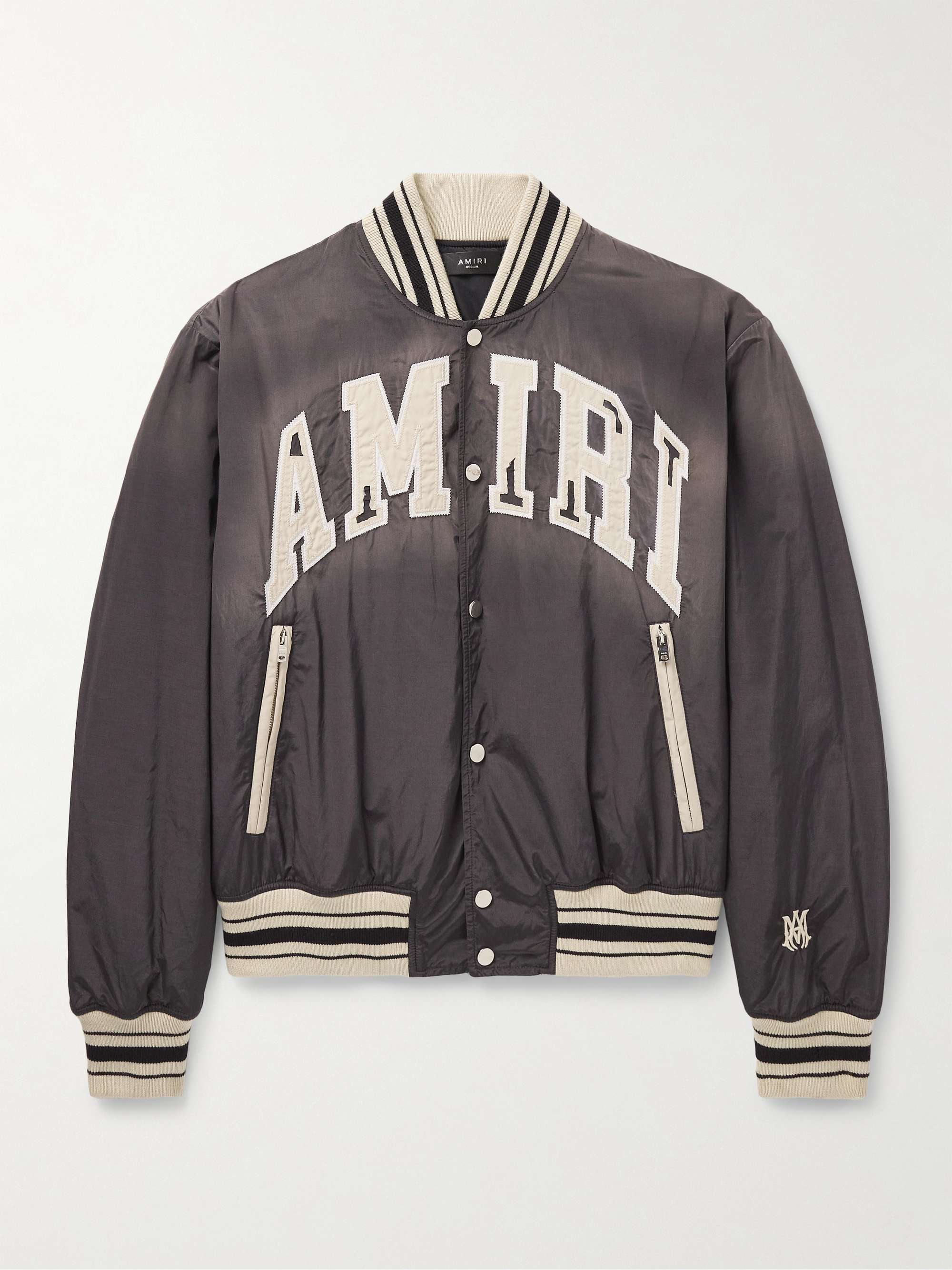
Complexity is not required here; the whole check runs shorter than choosing a size. Start by asking whether the shop’s name appears on the brand’s published stockists page, and treat a marketplace as requiring one extra question about who is fulfilling the order. Turn then to the discount, since current-season amiri jeans at seventy percent off from an unfamiliar storefront reads as a signal rather than a bargain. The stated country of origin should be plausible for the style: origin varies by product, and a mismatch is one of the more reliable red flags. Stow the order confirmation and the invoice, since the brand’s verification policy runs on proof of purchase. And should a site call itself an outlet, leave at once.
